
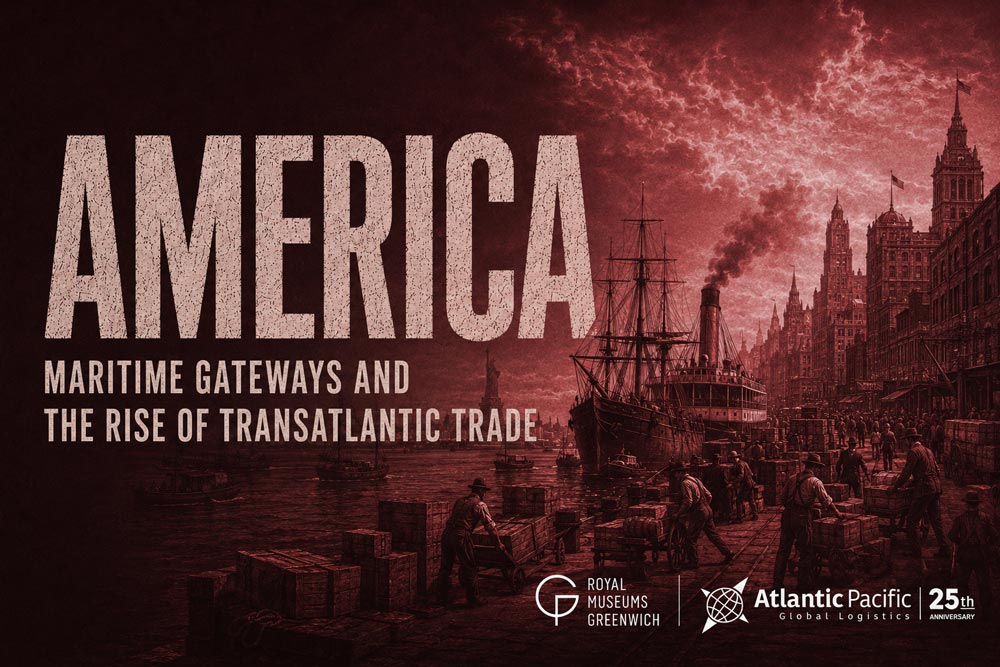
Week 27 – America’s Maritime Gateways And The Rise Of Transatlantic Trade
America’s rise as a trading power was shaped by its maritime gateways. Long before air freight, container ports or integrated global supply chains, the ports of the eastern United States connected a growing nation with Europe, the Caribbean and the wider world.
In the colonial period, ports such as Boston, Philadelphia, Charleston and New York became essential points of exchange. Ships carried tobacco, rice, timber, cotton, fish and grain out of North America, while manufactured goods, textiles, tools, books, furniture and luxury items arrived from across the Atlantic.
These ports were not just places where goods changed hands. They were commercial hubs where merchants, insurers, shipowners, customs officials and warehouse operators helped turn maritime movement into organised trade.

By the 18th century, Atlantic commerce had become increasingly structured. Regular routes linked American ports with Britain, the Caribbean and continental Europe. Ships carried exports one way and imports the other, but they also moved people, information, capital and influence. The port city became a powerful interface between local production and international demand.
New York’s position became especially important in the 19th century. Its natural harbour, access to inland markets and later the opening of the Erie Canal in 1825 helped connect Atlantic shipping with the American interior. Goods from farms and factories could move eastwards towards the harbour, while imported products travelled inland to expanding towns and cities. The port’s value came not simply from deep water, but from the network behind it.
The age of steam added another layer of change. From the mid-19th century, steamships made transatlantic crossings faster and more regular. This improved the movement of mail, passengers and higher-value goods, helping businesses plan with greater confidence. As schedules became more dependable, transatlantic trade moved closer to the recognisable systems of modern logistics.

These ports also carried a human story. Millions of people crossed the Atlantic in search of work, safety or opportunity, arriving through maritime gateways that shaped families, industries and cities. Trade history is never only about cargo. It is also about movement, labour, risk and change.
The history of America’s maritime gateways sits naturally alongside the collections and themes explored by Royal Museums Greenwich, where Atlantic trade, navigation, migration and maritime power form part of the wider story of global exchange.
For Atlantic Pacific Group, continuing its 25th anniversary partnership with Royal Museums Greenwich, the rise of America’s ports is a reminder that global trade depends on more than ocean routes. It depends on gateways that connect producers, markets, infrastructure and people. From sail to steam to modern container shipping, successful logistics has always been about turning distance into dependable flow.


