Week 32 – Mail Ships: When Communication Became Part of Global Trade
Before instant communication, information travelled at the same speed as the ships that carried it. A merchant in London could send instructions to India, China or the Americas, but the reply might not return for months. Prices could change, cargoes could arrive and political events could unfold long before the people involved knew what had happened.
That made communication one of the greatest limitations on early global trade.
During the 18th century, Britain increasingly used dedicated packet ships to carry government dispatches, official correspondence and private mail overseas. These vessels sailed on established routes and, unlike ordinary merchant ships, were expected to depart according to planned schedules. The service became known as the packet service, with Falmouth developing into an important base for routes across the Atlantic and beyond.
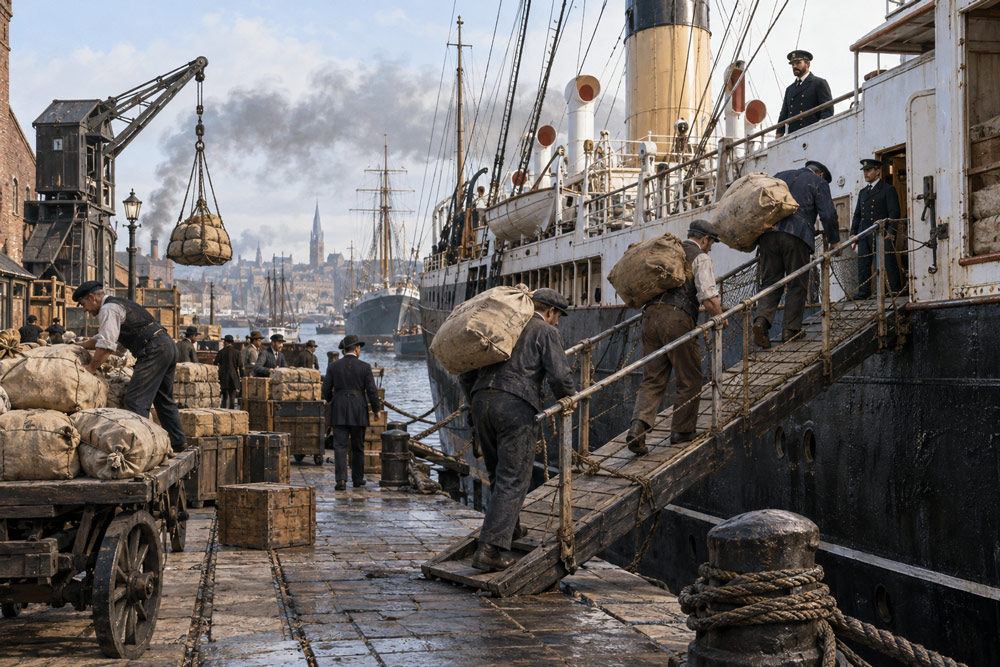
The arrival of steam power transformed the idea. Steamships were less dependent on favourable winds and could maintain far more reliable schedules. In 1840, the British government awarded a contract to Samuel Cunard and his partners to carry mail between Britain and North America. The first Cunard steamship, Britannia, sailed from Liverpool to Halifax and Boston that same year, helping establish regular transatlantic communication.
Mail contracts became commercially important. A shipping company carrying government mail gained regular income, but it also had to meet strict standards for frequency and reliability. This encouraged the development of scheduled liner services, where vessels sailed between fixed ports at advertised times rather than simply departing whenever cargo was available.
The familiar prefix RMS — Royal Mail Ship — reflected this role. Vessels authorised to carry Royal Mail could use the designation while working under contract. Famous liners including Titanic, Queen Mary and many others later carried RMS before their names, linking passenger shipping with a system that had originally developed to move letters and official communications reliably across oceans.
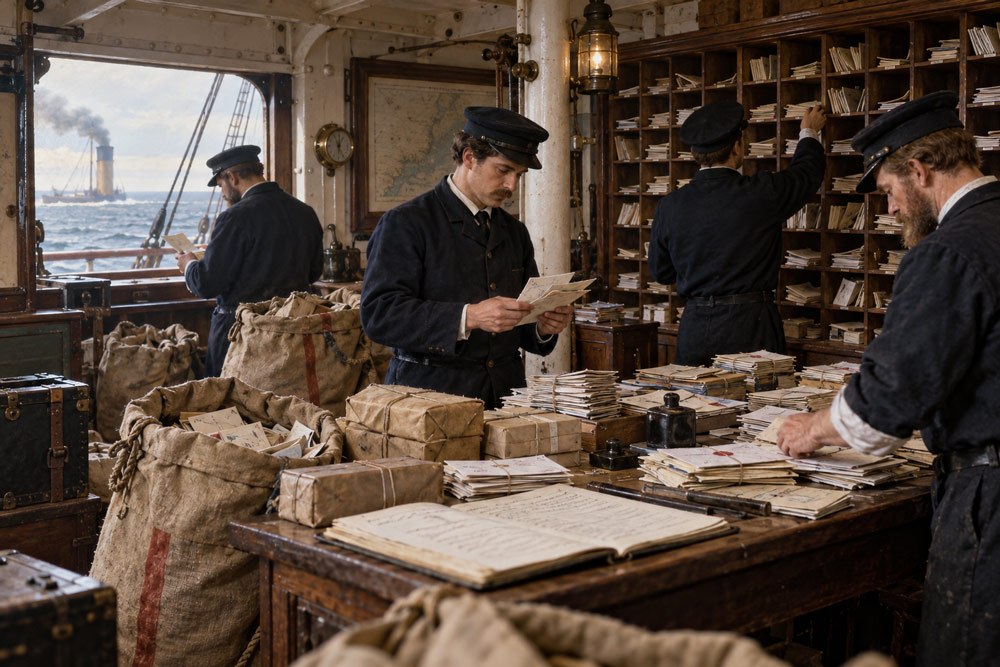
The impact on trade went far beyond the mailbags themselves. Faster and more predictable communication allowed merchants to send orders, contracts, bills of exchange, shipping instructions and market information with greater confidence. Businesses separated by thousands of miles could begin to operate within something approaching a regular commercial timetable.
Steamship routes carrying mail also connected ports across the British Empire and wider trading world, helping information move alongside passengers and cargo. For much of the 19th century, the arrival of the mail steamer could therefore be an important event: bringing business instructions, personal correspondence and news from overseas.
Royal Museums Greenwich’s collections reflect this era through material relating to steamships, packet services, postal routes and the development of scheduled maritime connections.
For Atlantic Pacific Group, continuing its 25th anniversary partnership with Royal Museums Greenwich, the story of the mail ships demonstrates that logistics has never been about cargo alone. Global trade depends just as heavily on the movement of information — and the packet ships and Royal Mail steamers were an important step towards the fast, connected supply chains we recognise today.